

गर्म डुबकी गैल्वेनाइज्ड कोटिंग्स स्टील सब्सट्रेट को उत्कृष्ट संक्षारण संरक्षण प्रदान करती हैं, लेकिन इसकी फिनिश हमेशा चिकनी या समान नहीं होती हैचित्र, पाउडर कोटिंगयाशेरर्डाइजिंग. सामान्य तौर पर, जस्ती कोटिंग्स को संक्षारण प्रतिरोध के लिए जस्ता कोटिंग मोटाई द्वारा निर्दिष्ट किया जाता है, और यह इसकी उपस्थिति से निर्दिष्ट नहीं होता है। हालांकि, खरीदार हमेशा यह निर्दिष्ट कर सकता है कि गैर-पुष्टिकरण क्या हैं, और नीचे विशिष्ट उदाहरण दिए गए हैं।
1. वेल्डिंग स्पैटर्स स्लैग
वेल्डिंग के तरीके जो स्लैग का उत्पादन नहीं करते हैं, जैसे कि एमआईजी वेल्डिंग, बेहतर हैं। यदि लेपित वेल्डिंग इलेक्ट्रोड का उपयोग किया जाता है, तो सभी स्लैग जमा को वेल्ड से सावधानीपूर्वक हटा दिया जाना चाहिए। सामान्य अचार के माध्यम से वेल्डिंग स्लैग को हटाना संभव नहीं है, और किसी भी अवशेष के कारण गर्म-डिप गैल्वनाइजिंग के दौरान काले धब्बे बन जाते हैं। गैल्वनाइजेशन शुरू होने से पहले वेल्डिंग स्पैटर्स, स्लैग और पोर्स को हमेशा हटा दिया जाना चाहिए, अन्यथा गैल्वनाइजेशन की सतह बहुत खुरदरी दिखेगी।

2. एसिड ट्रैप
Steel structures should be designed to avoid narrow crevices or gaps. If lap welds must be used, they should be welded around the entire joint. In case of double-sided fillet welds, the weld must be continued over the ends of the steel material to prevent the penetration of acid into any conceivable crevice. Plus, it is important to avoid the formation of pinholes. If the gap between contact surfaces is larger than 100 cm², venting holes must be provided to avoid the risk of explosion. Since molten zinc is more viscous than acid, it will seal the opening during hot-dip galvanizing. Afterwards, the acid will create holes in the coating, and then the rust-colored liquid will run on to the surface and spoils the appearance. Therefore, once acid has penetrated a crevice, it is impossible to be removed.
3. ड्रेनेज स्पाइक्स
Drainage spike is a very common defect, and it can be greatly avoided by setting up a hanging angle close to 45 degree ,which can minimize drainage at the bottom of the workpiece. Hanging steel works with a horizontal angle is forbidden, which will cause excessive drainage spikes. Grinding of drainage spikes shall be handled carefully, and overgrinding shall be prohibited.


4.ड्रॉस पिंपल्स
Dross pimples are small zinc-iron crystals formed from iron reacting with molten zinc during galvanization process. Dresses are heavier than zinc, and they settle on the bottom of the zinc kettle where they are periodically removed every 2 weeks or 10days. If the dross is stirred up and mixed into the molten zinc, it will often get trapped in the zinc coating leaving marks like pimples on the galvanization surface. An excessive amount of pimples can indicate a poor coating, and the zinc kettle shall be cleaned soon before another shift starts.
5. ऐश स्टेनिंग
Sometimes, ash is trapped inside areas and sticks to the outer side of the coating as the steelwork is lifted from the zinc bath. Ash may cause a light brown stain, a dull or dark surface appearance after removal. It has negative impact upon the performance of the galvanized coating, and it's possible to be repaired by zinc paint if its size is small.

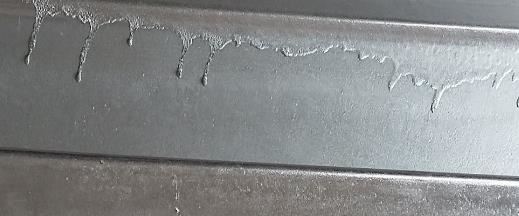
6. स्ट्राइक, गांठ और रन
पास की गैल्वनाइज्ड कोटिंग की तुलना में मोटी लकीरें और रेखाएं स्टील की सतह पर जस्ता की प्रतिक्रिया की अलग-अलग दरों के कारण होती हैं क्योंकि स्टील की सतह पर तनाव वाले क्षेत्रों या मूल धातु में परिवर्तित धातु विज्ञान के साथ वेल्ड क्षेत्रों या वेल्ड धातु की उपस्थिति होती है। यह घटना सबसे अधिक बार स्टील ट्यूब पर देखी जाती है औररोल का गठन स्टील प्रोफाइल. There is no impact on coating performance, but it does have appearance issue. Please also be reminded that it's a bad practice to remove the lumps by angle grinder vigorously, and this could remove the whole zinc coating leaving the steel uncoated.
7. हैंगिंग मार्क्स
Hanging marks are almost impossible to avoid, but it's possible to adjust the hanging angle to minimize the hanging marks. And, it's also possible to use manual grinder to remove marks with care, and then repair them by zinc rich paint.


8.गैल्वनाइजेशन फ्लेकिंग
Flaking is the separation of the entire zinc coating, including the iron zinc alloy layers from the underlying steel. It is also known as delamination or chipping and should not be confused with peeling where only the top pure zinc layer separates from the underlying zinc alloy layers. Flaking usually occurs in thicker than normal galvanized coatings (200 μm or more), especially when these coatings receive impact forces during handling. Excessively thick coatings generate high stresses at the interface of the steel and galvanized coating which causes the zinc to become flaky and separate from the steel surface. Flaking typically occurs near the edges and creates bare spots in the protective zinc coating and it should be repaired to ensure ongoing corrosion protection. If the area of flaking is small, it can be repaired; however, if the flaking area is larger than allowed by the specifications, the part must be rejected and re-galvanized. Flaking can be avoided by minimizing the immersion time in the galvanizing kettle and cooling of the galvanized steel parts as quickly as possible, and if possible using a different steel grade. Steels with phosphorous content greater than 0.025 percent can experience flaking after galvanizing, even when the silicon levels are satisfactory.
9.छीलना और प्रदूषण
Delamination or peeling creates a rough coating on the steel where the zinc comes off. Many large galvanized structures and steel profiles take a long time to cool in the air, and the zinc coating continues to form zinc-iron layer after they have been lifted from the zinc bath. This continued coating formation leaves a gap between the top two layers of the galvanized coating. If there are many gaps formed, the top layer of zinc can separate from the rest of the coating and peel off the part. If the remaining coating still meets the minimum specification requirements, then the part is acceptable. If the zinc coating that remains on the steel does not meet the minimum specification requirements, then the part must be rejected and re-galvanized.
10.बेयर स्पॉट
स्टील की सतह पर नंगे धब्बे, बिना ढके क्षेत्र, एक सतह दोष है जो अपर्याप्त सतह की तैयारी के कारण हो सकता है। बेयर स्पॉट वेल्डिंग स्लैग, कास्टिंग में एम्बेडेड रेत, गैल्वनाइजिंग केतली में अतिरिक्त एल्यूमीनियम, या एक छोटे से क्षेत्र में कोटिंग को बनने से रोकने वाले उपकरणों को उठाने के कारण हो सकते हैं। नंगे धब्बों से बचने के लिए, गैल्वनाइज़र को यह सुनिश्चित करना चाहिए कि सतहें साफ हों और पूर्व उपचार के बाद जंग न लगे। रिच जिंक स्प्रे द्वारा छोटे नंगे धब्बों की मरम्मत की जा सकती है। यदि बेयर स्पॉट का आकार या स्पॉट की कुल संख्या आईएसओ 1461 द्वारा निर्दिष्ट आवश्यकताओं से ऊपर है, तो स्टील वर्कपीस को पूरे प्रीट्रीटमेंट और गैल्वनाइजेशन से फिर से गुजरना होगा।


11.मोटलिंग
A mottled surface appearance is caused by uneven cooling rates of newly hot-dip galvanized articles after withdrawal from the zinc bath. During air cooling of the articles, the zinc-iron coating formation reaction, consuming the outer free zinc layer in the process, can continue for a short time as long as the steel stays about 550 Fahrenheit degree. Due to the fact that the galvanizing reaction continues on the interior portion and consumes the free zinc layer, but not the exterior potion of the steel, and this causes a nonuniform appearance of the zinc coating. However, this difference in appearance does not affect the corrosion protection of the galvanized coating, and this mottling surface is acceptable per ISO 1461 specifications. Therefore, to speed up the cooling process, quenching is recommended. But, the galvanizers shall be reminded that some designs might not be suitable for quenching as they have a tendency for warpage or distortion during quenching process.
After galvanizing, the steel cools from a temperature of approximately 840 F to ambient temperature. If the steel is quenched, cooling takes place rapidly, but not all galvanizers have quench baths and quenching is not recommended on some designs due to the potential for warpage/distortion of the steel. When the newly galvanized steel is allowed to cool naturally (without quenching), it can take several hours for the steel to come down to ambient temperature. Thinner steel cools faster while thicker steel takes longer to cool. Sometimes an individual piece of steel will have different cooling rates.
12. सुस्त खत्म
The most common reason for dull appearances is the chemistry of the workpiece, and the main elements of steel chemistry which most strongly influence the final appearance are silicon and phosphorous. Both elements are catalysts to coating growth, and the thicker coating is responsible for the differing appearance. In addition to producing thicker coatings, highly reactive steels tend to have a matte gray or mottled appearance instead of a typical bright coating.
13. जस्तीकरण की खराब मरम्मत
गैल्वनाइजेशन रिपेयरिंग का काम किसी भी तरह से गैल्वनाइजेशन वर्क जितना ही महत्वपूर्ण है, और कुछ सामान्य गलतियाँ हैं जिनसे बचा जाना चाहिए।
√ Overgrinding, removed the zinc coating completely
√ मरम्मत के लिए कम जस्ता सामग्री वाले स्प्रेयर का उपयोग करना
√ जिंक की मरम्मत की मोटाई आवश्यक मोटाई को पूरा नहीं करती है

Fabmann के पास जगह को कवर करने के लिए सख्त उत्पादन प्रक्रिया नियंत्रण हैधातु की सतह का उपचार, और हमारे पास बहुत अनुभवी गुणवत्ता इंजीनियर हैं, जिन्हें हॉट डिप गैल्वनाइजेशन, गैल्वनाइजेशन और गैल्वनाइजेशन रिपेयर के प्रीट्रीटमेंट के बारे में गहरा ज्ञान है। इसलिए हम व्यापक श्रेणी के स्टील उत्पादों के लिए प्रीमियम गुणवत्ता प्रदान कर सकते हैं जैसेडॉक ब्रैकेट हार्डवेयर, कस्टम रैक, प्रबलित कोण कोष्ठक, रोल का गठन स्टील प्रोफाइल, साइन पोस्ट कोष्ठकतथामछली पालन के लिए पिंजरे कोष्ठक to our clients.